Sometimes I cannot bear to listen to the news, but I can read a book that captures pain and sorrow beautifully. And it strengthens my resolve. My politics is shaped as much by art as by cold hard facts. Art makes facts less cold so that we can hold them.
Art is essential. Art is not frivolous. Art helps us empathize. How would we know what it is like to live someone else’s life if not for stories?
Art helps us imagine a better world.
Art helps us face the cruelty of our current world.
Art is magic. It heals and comforts and delights.
Even the silliest art can be powerful.
Once I had to listen to people tell me about the hardest parts of their lives over the phone. At first I couldn’t bear to listen without being able to clasp their hands or hand them a tissue. But then I had the idea of using a paint-by-number kit while we talked. Putting little dabs of color on canvas sustained me. I could listen. And the person on the other end of the line said, “Thank you. I feel much better now. I feel lighter.”
Beware the people who tell you there is not enough time or money or energy for art. Beware the people who tell you there is not enough.
I have seen too many empty houses boarded up while people sleep on the street to believe in scarcity. I have seen too many dumpsters filled with food while stomachs go empty to believe in scarcity.
The people who tell us there’s not enough don’t know anything, and they definitely don’t know what we really need.
If you want to make my stomach churn, all you have to say to me is, “Can we agree not to talk about politics?” or “Let’s just agree to disagree!”
Don’t get me wrong. I get why people say this. Nobody wants to have a screaming match at the dinner table, especially if you’re seeing people you love but don’t often get to see, like family members who live thousands of miles away or childhood friends who rarely visit your hometown at the same time you do. And it can feel pointless to talk about something when you don’t think there’s any hope that the person you’re talking to will change their mind. They might have no interest in changing their mind at all.
However, politics isn’t just about opinions. It’s about power. The power to determine who has enough food to eat, clean water to drink, clean air to breathe, a home to live in, access to healthcare and schools and libraries, a job with dignity and the ability to retire when working becomes difficult. Increasingly, I think politics is a choice between realizing that we are all interconnected and that you can’t guarantee safety and dignity for some at the expense of others, or pretending that safety and dignity can be bought. Of course I disagree with the latter view. Evidence of its incongruence is all around us. Think of the wildfires ravaging parts of Los Angeles, including ultra-wealthy neighborhoods, or the floods that have threatened even the fanciest New York City zip codes.
Truly, we are all in it together.
For that reason, I think talking with each other is worthwhile. I believe it’s possible –– and really, really necessary –– to have conversations about politics that are not just pointless arguments or relationship-enders.
What has helped me have better conversations with people with differing political views is to listen (it can be really hard, but I try to listen to other people like I hope they might listen to me) and to ask questions about their opinions and how they came to those conclusions. I also ask questions based on what I’ve observed, and most importantly, when I share my views, I do it in a way that is personal. I use lots of “I” statements about what I’ve experienced or share the stories of people I love. Watching movies and TV shows together can also be helpful because media can help us see other perspectives and develop empathy.
Whenever possible, I try to talk in person, but it can also work to talk on the phone. Texting is OK sometimes, but posting on social media almost never works for me.
There’s really good advice about how to have these kinds of conversations from Celeste Headlee, who wrote a book and did a TED Talk about this very topic.
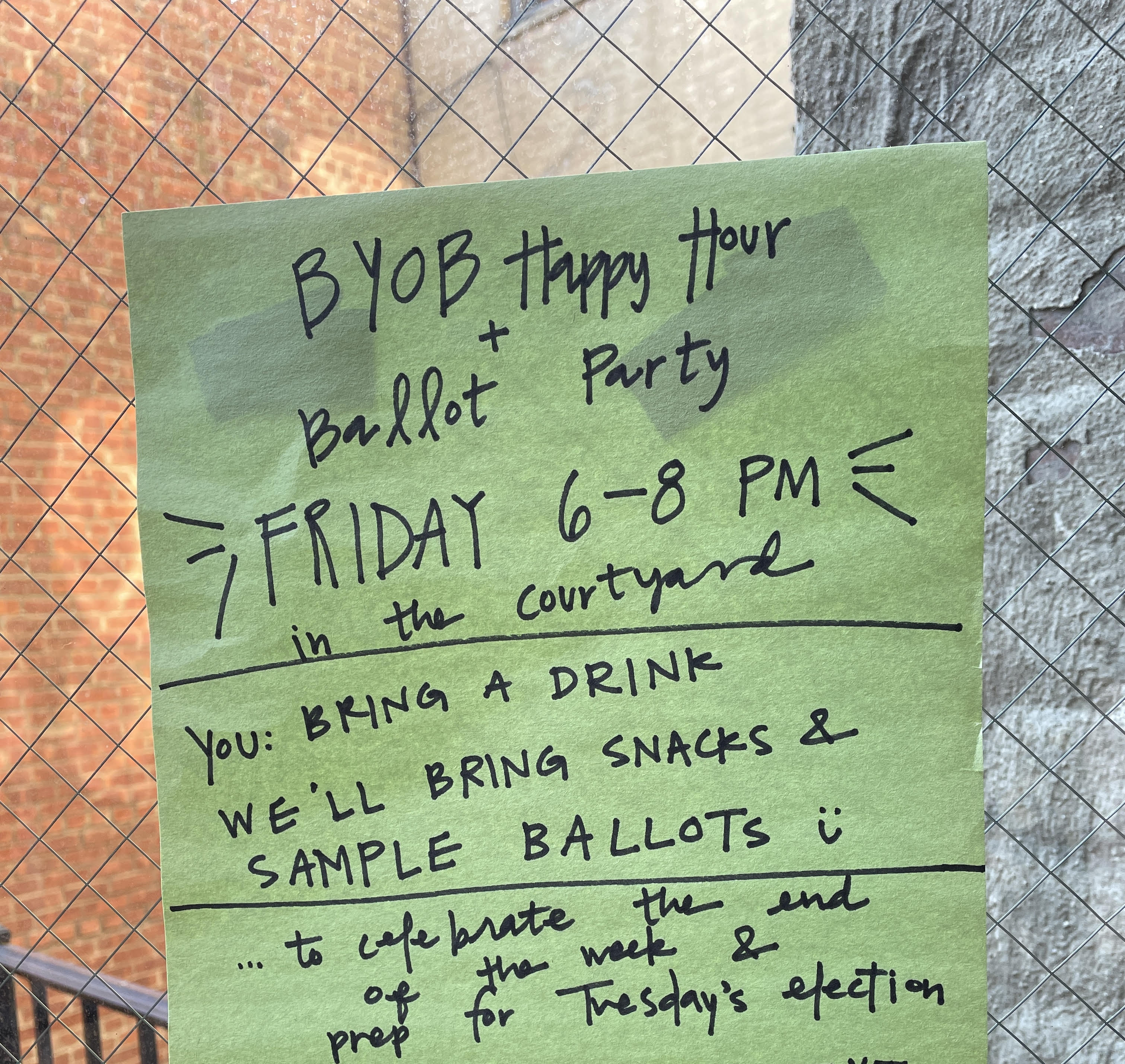
One way I try to foster political dialogue is to host ballot parties with my neighbors. Here’s a homemade sign I made to advertise a ballot party in our apartment building’s courtyard a few years ago.
I don’t always get it right, but I hope that over time, I get better at having conversations like these. Our lives and our future are too important not to try.
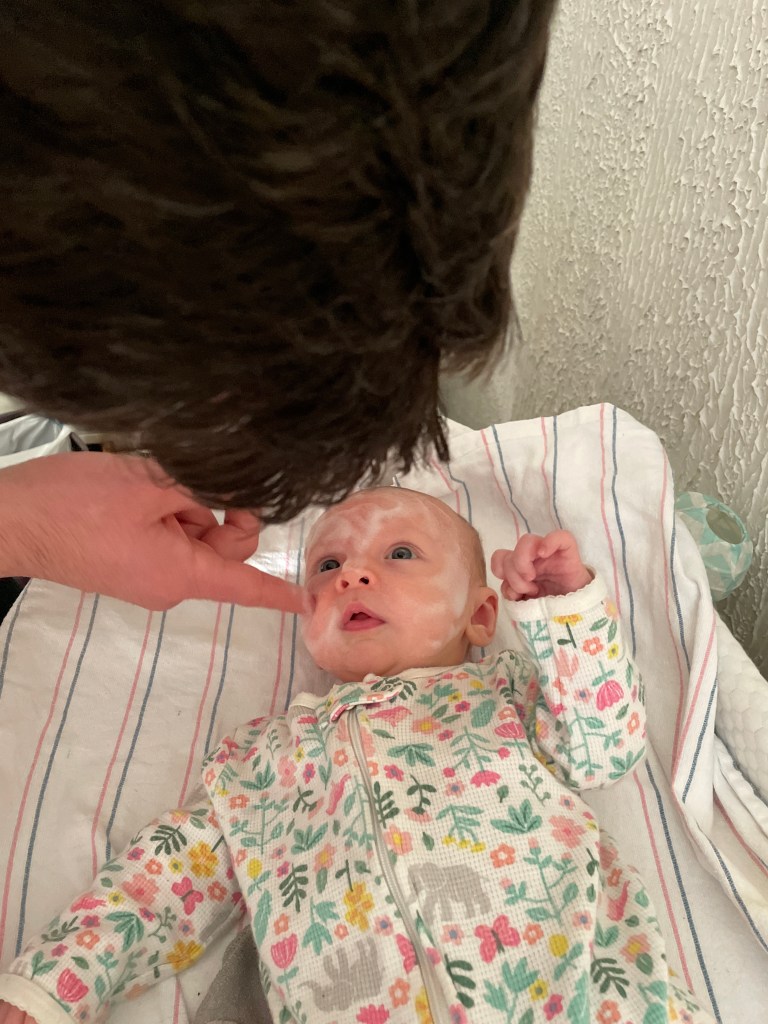
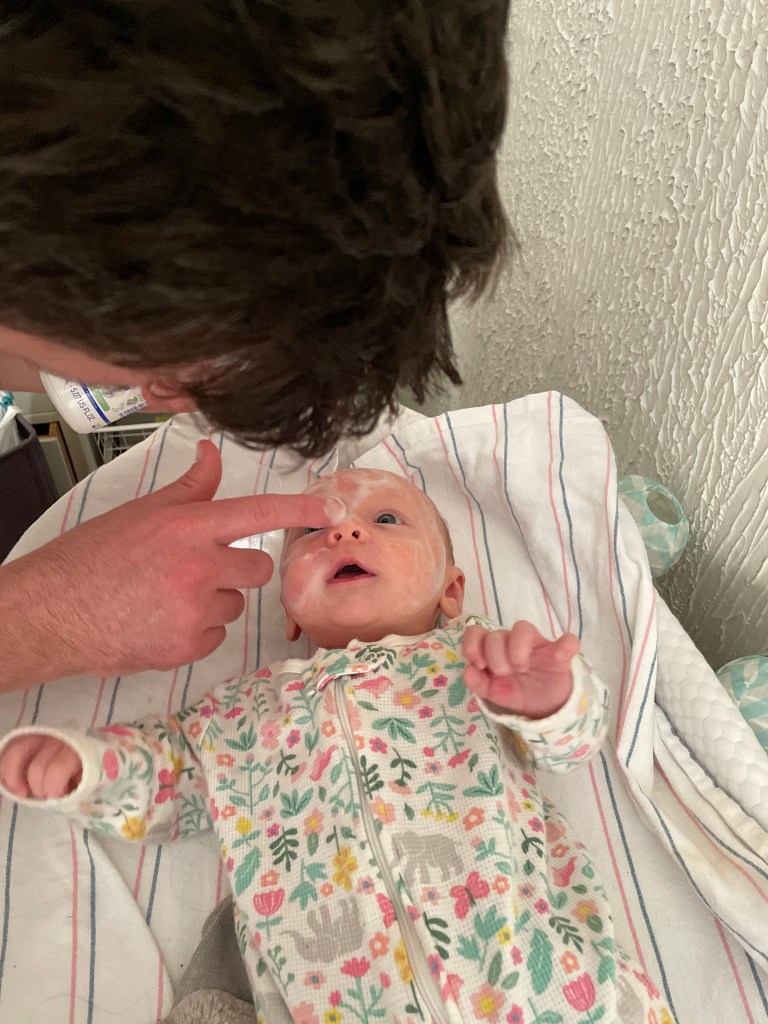
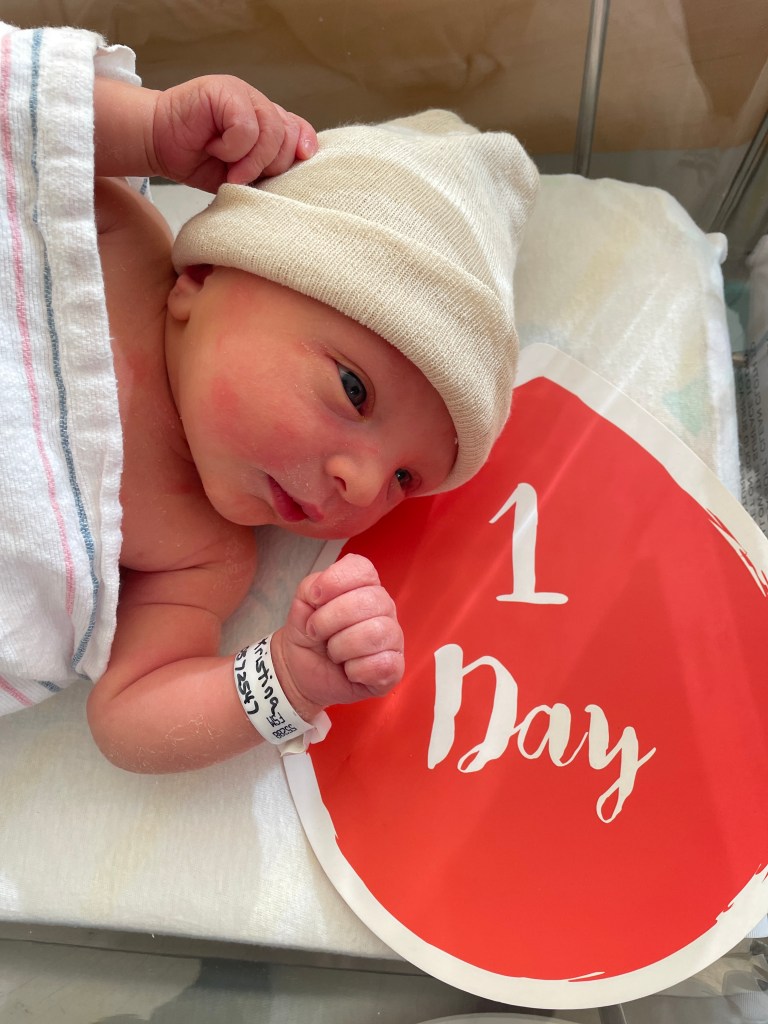
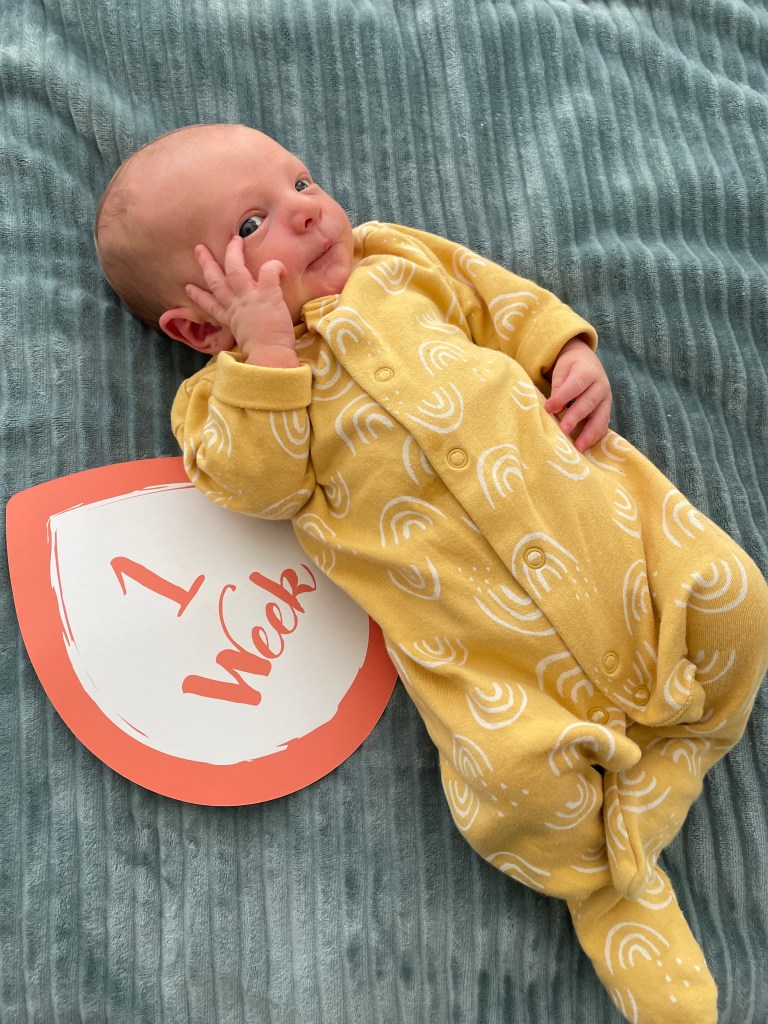
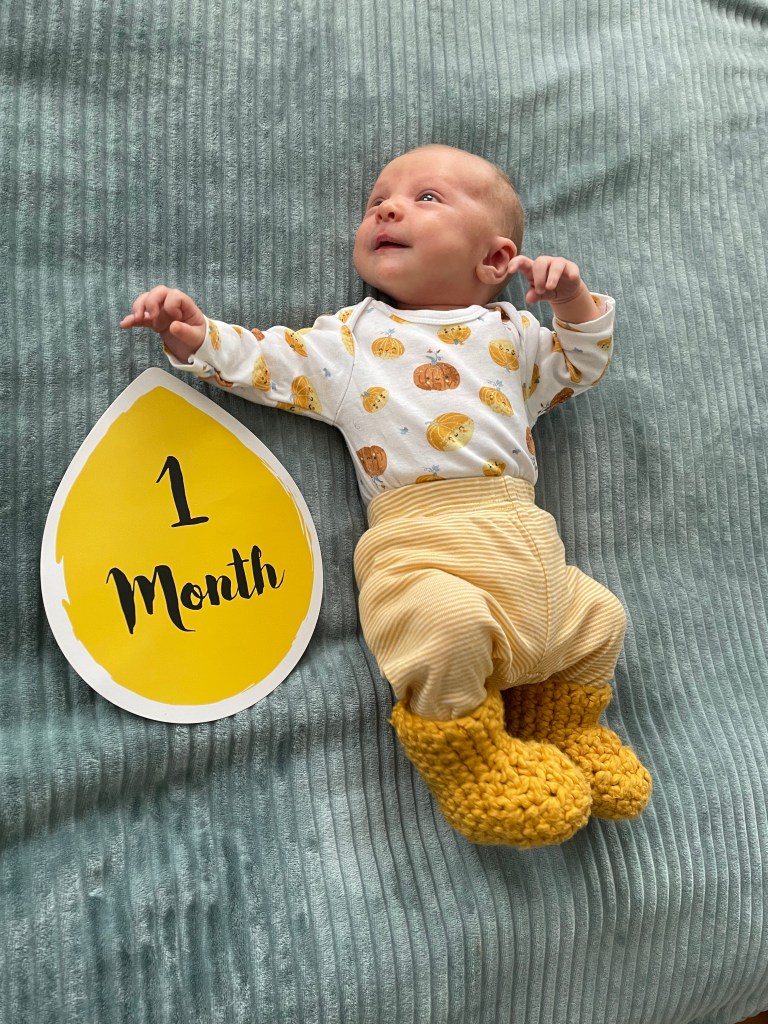
I have a few friends who are having babies right around now, and since I found the early days of parenting overwhelming, I thought I’d put together a few things that helped me. The first tip is about recovering from childbirth, but the rest are useful for anyone taking care of a newborn.
Of course, these are just the things that helped me with my baby, so they might not be useful for you, but maybe they’ll be helpful to someone somewhere someday.
Bodies recover from childbirth (but not as fast as in the movies)
In my opinion, we talk a lot about pain in childbirth but not enough about what happens after. If I could time-travel, I would tell myself not to worry: “Be very gentle with yourself for forty days.” All the abuelitas are right! That’s how long it usually takes to recover. Treat it as a time to rest and trust that it’s normal for you to feel physically injured or weak or just different from how you felt before and during pregnancy. You can also ask for a referral for pelvic floor therapy, which should be standard care for postpartum recovery but isn’t in the U.S. (Thankfully, everyone I know who has asked has been able to get it, and it’s been covered by insurance.)
There are magic tricks for helping babies sleep
When baby E. was two weeks old, I got to meet with a lactation consultant who changed my life. She taught me how to help my baby sleep using the magic of sleep cycles. Here’s what I learned: we all have cycles of light sleep when it’s really easy to be woken up and deep sleep when it’s much harder to wake up. To put a newborn to sleep, change their diaper, feed them, and then hold them for 15–20 minutes before putting them down. They sleep so much better that way. It’s dreamy.
Babies like to be cozy
Putting a newborn in a swaddle helps them sleep because they feel cozy and can’t wake themselves up with their arm movements. There are lots of swaddles, so use whichever ones work for you. We got these zipper ones as hand-me-downs, and they were very easy to use. Sometimes putting the baby in the swaddle is hard because they resist it and cry, but in my experience, they’re a lot happier in the long-run so I think it’s worth it. I also used a baby wrap so that I could hold my baby close to me and use both of my hands! Devin used a wrap, too, so E. got to be extra cozy and took almost every nap like this for many months. Some of my happiest memories of the early days are of E.’s nap times snuggled close to me in the baby wrap.
I’ve never been a big daytime napper, and that didn’t change when E. was born, but I felt guilty for not sleeping when the baby was sleeping. One day I had a lightbulb moment, I could choose in the morning to have a napping day and forego my usual cup of tea or I could have a cup of tea with the understanding that I probably wouldn’t be able to nap. On days that I wasn’t able to nap, I tried to let myself rest by reading a book or listening to a podcast during some of E.’s naps. It made me feel restored even if it wasn’t as restful as sleeping.
Pacifiers come in many shapes and sizes
They can be really useful for helping babies calm down, but you have to find the right one for your baby. These worked best for E.
Turn your baby into a Tamagochi (i.e. technology can be your friend)
My favorite apps: Huckleberry (for tracking feedings, diaper changes, and even baths, especially in the first few months when the days all blend together!), The Short Years (for making a baby book in the easiest way possible), One Second Every Day (for making it easy to capture the magic of time passing and babies growing).
Count on your friends, family, professionals, and even strangers
Taking care of a newborn is so intense, and pretty much everyone who has ever done it is on your team, willing to share advice and give you encouragement! I say “pretty much everyone” because one time I said taking care of a baby all day was hard, and someone responded, “I never found it hard,” which is great (I hope other people feel that way!), but it is also the worst possible thing to say to someone who hasn’t slept in weeks and is terrified that her baby isn’t gaining enough weight and also wonders if she’s failing to be “fully present.” Never, ever say this to anyone. Unless they’re like, “Isn’t taking care of babies easy?” Then, you can say it, but you should probably only do so in some kind of secret society/soundproof clubhouse situation.
That’s slightly off-topic, but here’s my point: even if you feel like you’re all alone because it’s been a week since you left your apartment and it’s 3 a.m. on a Tuesday night, I promise you there’s someone willing to read your text in the morning or respond to your post on Reddit or Facebook right away. My friend Juliet was always up feeding her baby at the same time I was, and our text conversations were a lifeline. I had friends of friends who offered to help me go on my first walks with baby E. or just sat on my front porch and had tea with me while I asked them everything they knew about being a new parent. I had friends without kids who let me call them when they were commuting to work and told me about their regular days, which sounded so nice to me (“You went to the gym and bought a bagel? Tell me me everything!”). I also found a pediatrician that answered all my questions (even when I asked them repeatedly) and made me feel like I could handle keeping my baby happy and healthy. I’ll remember the voice she used to talk to my baby forever and ever. Ana, the woman at the front desk at the pediatrician’s office also made me feel that way. Every time we came in, she showered E. with compliments and made me feel like she was as excited to see me as I was to see her.
I hope you find people like that in your life, and I know you will. I’m here, too.
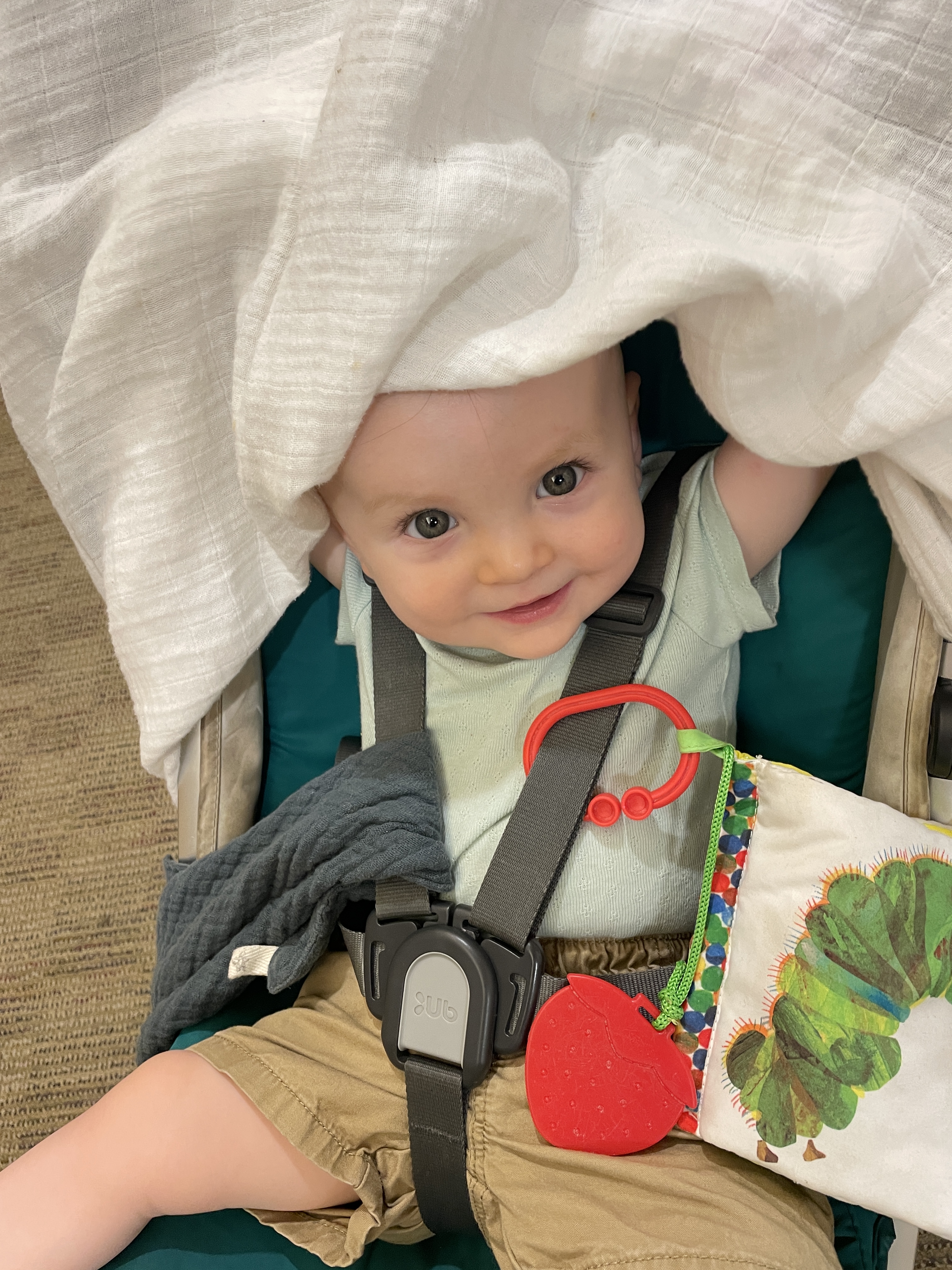
We’ve been using a light blanket to cover the gap between the stroller’s sunshade and the baby’s feet. But today I got to the doctor’s office and realized E. had been riding like this!
You know how they say you can finish any writing project if you just work on it for ten minutes a day? My new writing partner and I are testing that theory. I type furiously for ten minutes and then we go do something else for a few minutes (or hours or days…) before returning to the work.
I’m hoping this will help me be more efficient and write “ugly first drafts” faster. Even if it doesn’t, I love our new system. It might not be the best way to get writing done, but it’s certainly the cutest.
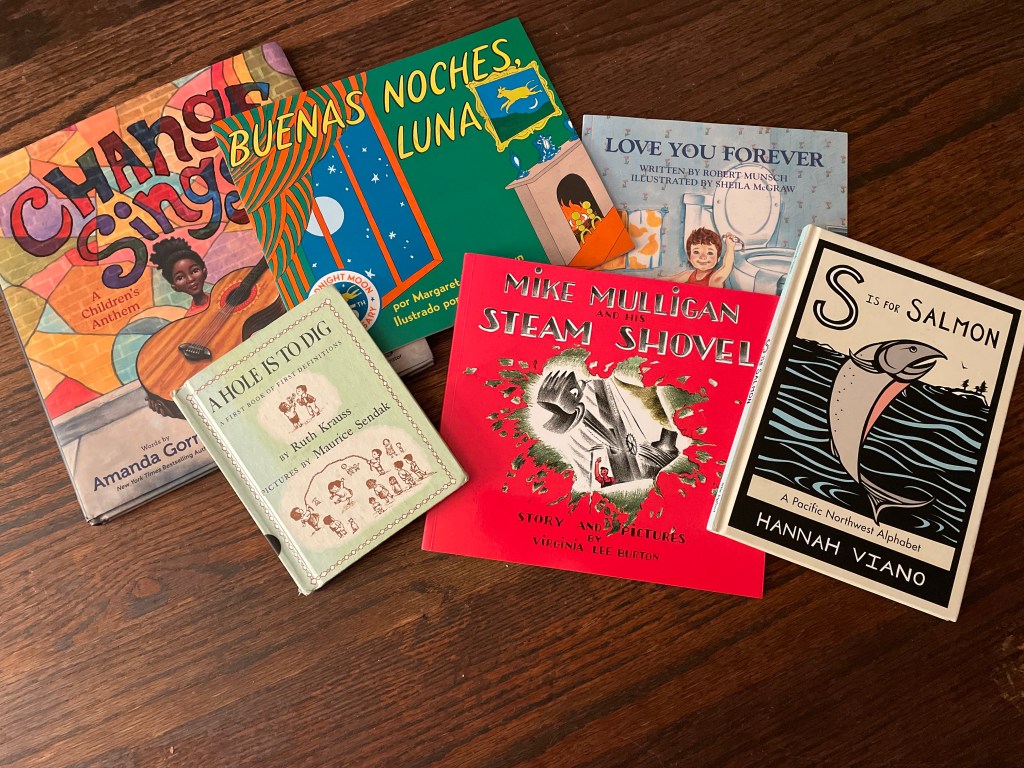
Devin’s Aunt Mary sent us the most incredible baby gift: six picture books, each carefully chosen. Reading Mary’s explanation for each book left me in awe. It’s one of the most thoughtful gifts I’ve ever experienced.
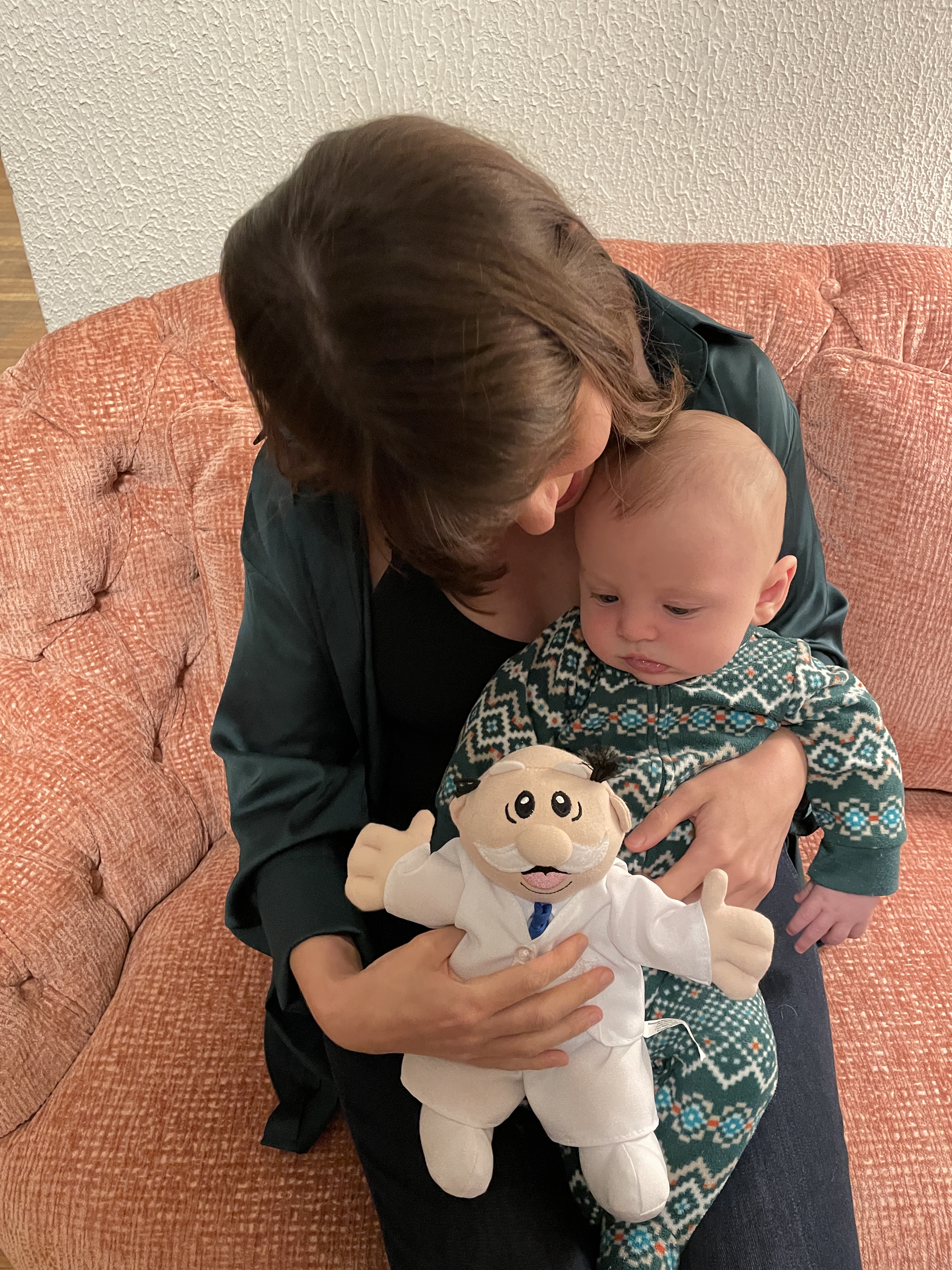
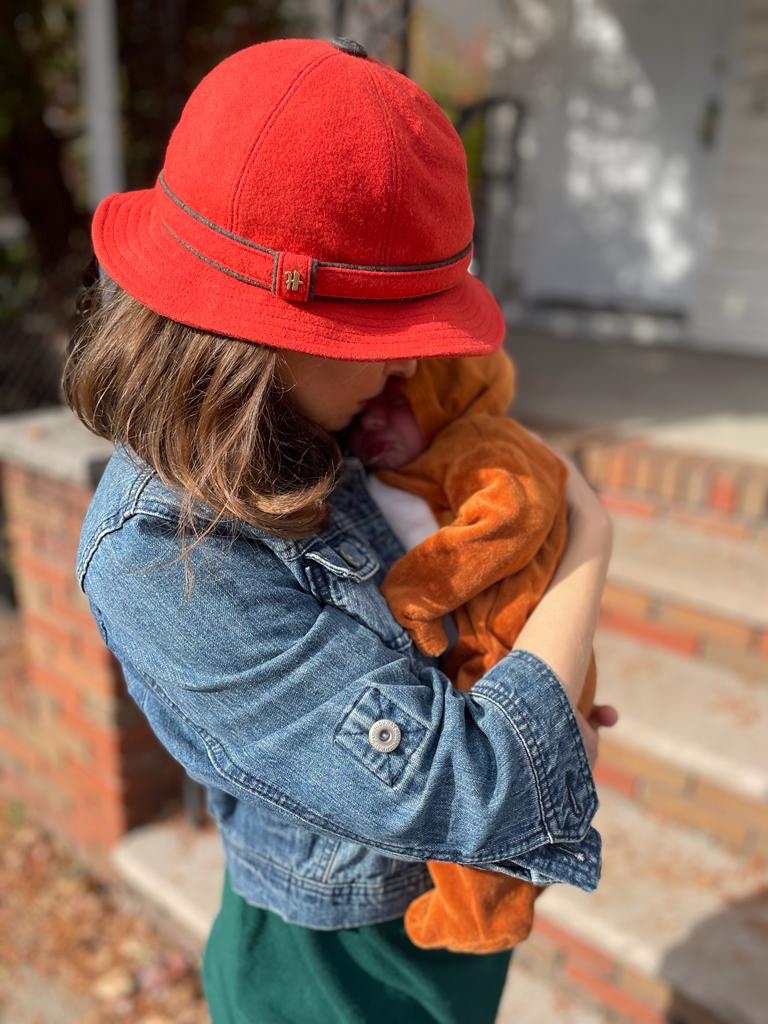
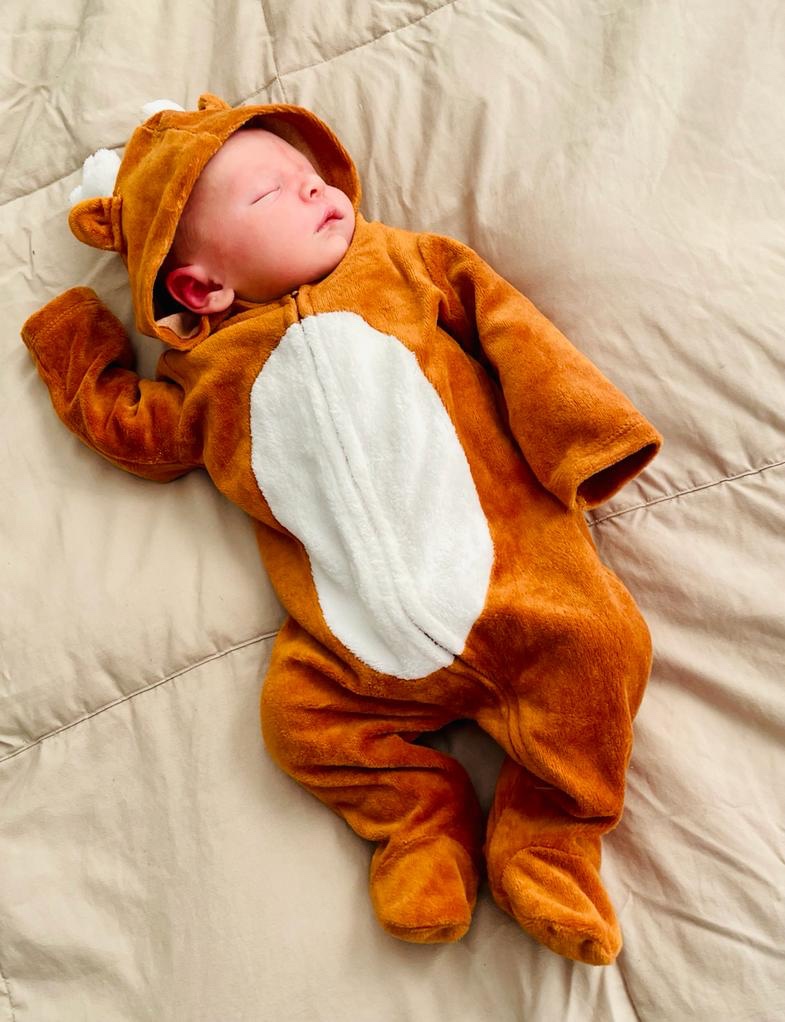
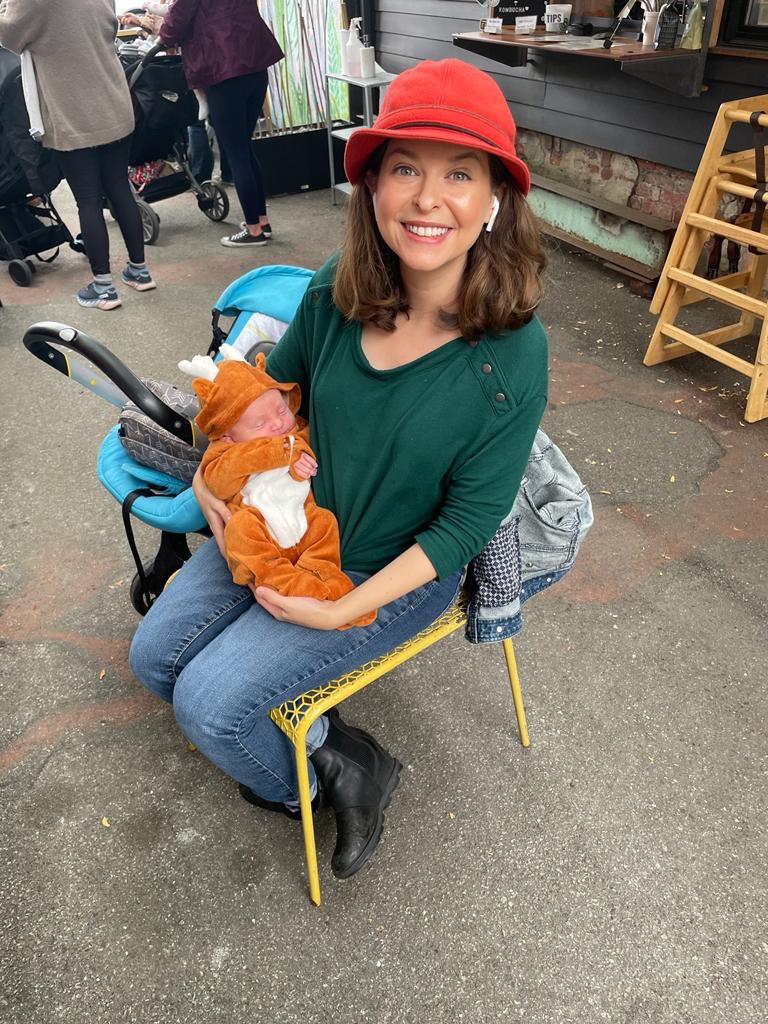
Consoling my tired little deerA big nap after our Halloween walk with other babies in the neighborhood. You couldn’t really see the babies’ costumes on the walk because all of the kiddos were either in strollers or in baby-wearing contraptions, but it felt good to be part of an event!I wore a green shirt and orange hat to look vaguely pumpkin-y, but two people asked if I was Paddington Bear ¯\_(ツ)_/¯

 smoothliminal